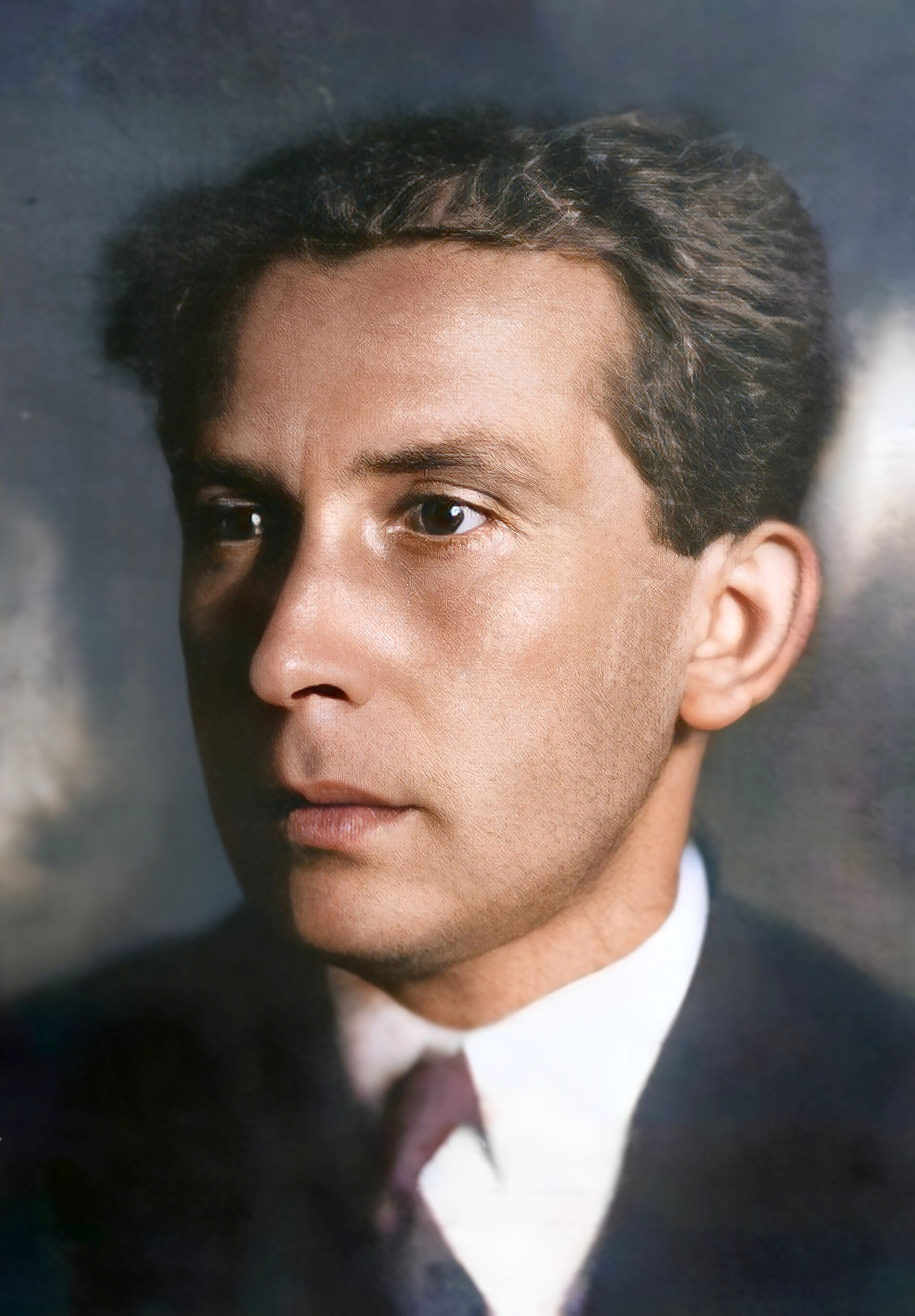
Aleksandr Veprik: A Silenced Voice of Jewish Music in the USSR
Aleksandr Moiseevich Veprik (1899–1958) was one of the most gifted Jewish composers and musicologists to emerge from the Russian Empire and early Soviet Union, yet his life and career were tragically shaped—and ultimately stifled—by the antisemitism, repression, and ideological purges of Stalinist Russia. A pioneer in fusing Jewish musical traditions with early 20th-century modernism, Veprik’s virtually unknown canon reflects the dangers of ethnic-particularism in the USSR and the degree to which antisemitism filtered into aesthetic strictures and personal repression. In contrast with composers like Sergei Prokofiev and Dmitri Shostakovich who incorporated Jewish themes, who were targeted under aesthetic denunciations related to “cosmopolitanism” or Soviet antisemitism like Zhdanovshchina (1948), but who were not personally of Jewish ancestry, Veprik faced substantial personal threat from the Soviet authorities.
Born in 1889 in Balta, a town near Odesa in the Podolia region of Ukraine, Veprik came from a Jewish family embedded in the shtetl culture that would later inform much of his compositional style. Prior to the Revolution, Veprik was already intimately familiar with antisemitic violence with the pogroms of the late 1880s and particularly the 1905 pogrom in Odesa orchestrated by the Russian police and security apparatus. He moved briefly to Leipzig to study piano and later entered the Petrograd Conservatory (1918-1921) and the Moscow Conservatory (1921-1923), where he studied composition under the tutelage of Alexander Glazunov and Maximilian Steinberg, and organ with Louis Homilius.[1] In the 1920s, Veprik emerged as a leading figure among a group of Jewish composers seeking to establish a modern national Jewish art music, particularly through the Society for Jewish Folk Music. This organization, along with contemporaries like Joel Engel and Lazare Saminsky, aimed to elevate Jewish folk and liturgical motifs within European art music and eventually served as important ethnographic preservation of Jewish music which was threatened or lost in WWII. Veprik’s works from this era reflect deep engagement with Ashkenazi traditions and liturgical modes, but also with the Western modernist currents of the time—most notably those associated with Debussy, Scriabin, and Bartók.[2]
Some notable works include: Oriental Poem (1920), Jewish Suite (1925), and Lullaby (Eliyahu Hanavi) and Kaddish (1927–28). One of Veprik’s earliest and most celebrated works, Oriental Poem reflects a fascination with the modal structures and rhythms of Jewish and Middle Eastern music. Scored for chamber ensemble, the work blends exoticism with soaring romantic and sentimental themes—combining Jewish folk inflections with the lush harmonic language of French Impressionism. The piece became one of the staples of the Society for Jewish Folk Music’s concert programs and served as a musical manifesto for the Jewish art music movement. The Jewish Suite (1925), was composed for string quartet and has a similar incorporation and sampling of dance themes that Joel Engels incorporates in his work. Each movement draws upon specific folk melodies and dances—such as the freylekhs and hora—reimagined through a sophisticated harmonic lens. The suite exemplifies Veprik’s ability to preserve the authenticity and vitality of Jewish dance music while placing it within the context of art music. This duality the very essence of the Jewish diasporic identity in Eastern Europe and the excellence of Veprik’s music. His vocal-orchestral miniatures Lullaby (Eliyahu Hanavi) and Kaddish (1927–28) reflect Veprik’s engagement with liturgical texts. Eliyahu Hanavi is a haunting lullaby, rendered in a melancholic, almost meditative tone. Kaddish, the Jewish mourner’s prayer, is perhaps Veprik’s most emotionally direct work. Its harmonic tension and ascending melodic gestures express grief and transcendence without overt dramatization and it has been arranged for many solo instruments like viola in addition to the vocal version. The setting avoids sentimentality, offering instead a spiritual introspection that subtly aligns with the tonal restraint of Russian Orthodox liturgy, but remains unmistakably Jewish in its core in both text and harmonic content.
While the early 1920s offered a brief window for Jewish cultural flowering under the Soviet policy of korenizatsiya (nativization), which nominally encouraged minority cultures presuming the content also promoted Socialism. However, this support quickly evaporated as Stalin consolidated power. By the mid-1930s, the ideological climate had turned dramatically against expressions of ethnic and religious identity, particularly non-titular nationalities like Jews and Tatars.[3] Correspondingly, Veprik’s position became increasingly precarious. Though he held prestigious posts, most notably as a professor at the Moscow Conservatory, he was Jewish, and wrote both modernist and ethnically specific works. As Soviet cultural policy grew increasingly dogmatic, the aesthetic guidelines of Socialist Realism began to exclude Jewish materials, labeling these themes as formalist or cosmopolitan, and applying moral judgement beyond compositions to target individual composers.[4] The Stalinist cultural restriction around the Terror (1934-1938) brought a wave of destruction to Jewish cultural institutions: Yiddish presses were shut down, Jewish theaters were closed, and composers who continued to engage with Jewish themes found themselves accused of nationalism or bourgeois decadence. Veprik, despite attempting to navigate this narrowing space, remained artistically committed to his roots. One notable piece from this era is his Suite on Hebrew Themes. This lesser-known but deeply poignant work is notable for its chromatic density and contrapuntal richness, signaling a turn toward a more introspective style. Here, Veprik juxtaposes klezmer-like motifs with dense, almost expressionistic textures, suggesting both a celebration of identity and a lament for its suppression.
Throughout the Holocaust and the immediate aftermath, Veprik like Beregovski and other ethnographic collectors became an important figure in Jewish cultural preservation under dual Soviet and Nazi onslaught. Pieces like Veprik’s unpublished manuscript to In the Synagogue (ca. 1940) offers a fascinating glimpse into his continued engagement with Jewish themes even as the political climate turned hostile. The piece likely draws upon his memories of synagogue services in Balta, incorporating tropes from cantorial singing and the structure of a Shabbat service. Though modest in scale, the piece reveals the persistence of religious memory in a composer living under a regime that forbade religious expression.
The cultural repression of the 1930s was echoed in the postwar period in a series of antisemitic campaigns which swept through Soviet institutions. Aimed primarily at Jews, these “nti-cosmopolitan” attacks included cultural censorship under Andrei Zhdanov (Zhdanovshchina), the “Doctor’s Plot” of 1948, and the Night of the Murdered Poets (1952) which all carried common accusations of sedition or lacking patriotism, promoting Western values, or being secretly aligned with Zionism.[5] Veprik was arrested in this wave of persecution and sent to the Gulag. Official records cite "counter-revolutionary nationalist activity"—a vague and commonly used charge against Jewish cultural figures. He was sentenced to five years in labor camps, enduring physical and psychological hardship. Conditions were harsh, particularly for an intellectual unaccustomed to manual labor. According to reports from former students and colleagues, Veprik suffered from deteriorating health, chronic malnutrition, and increasing isolation during his imprisonment.
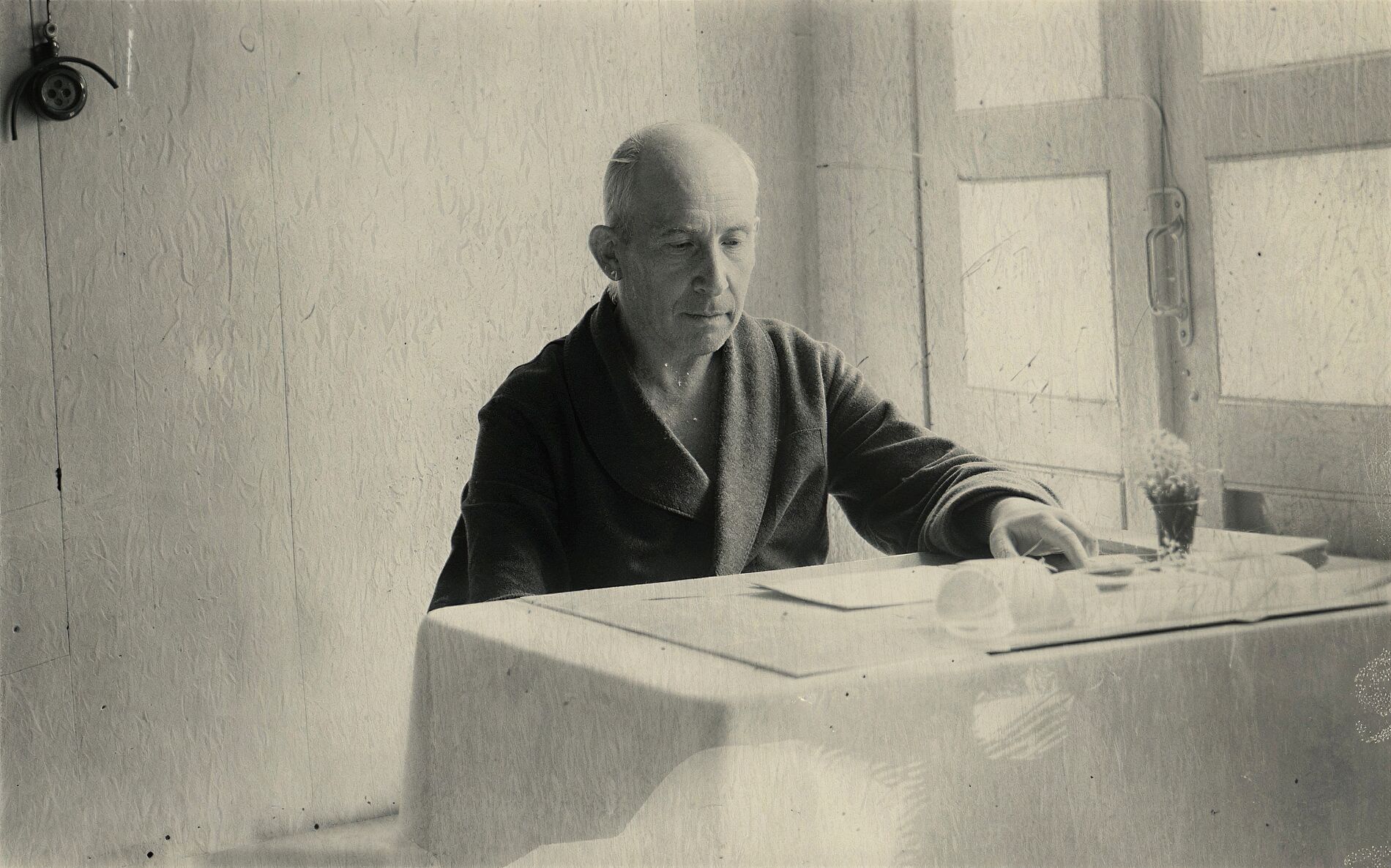
Aleksander Veprik in the Siberian Gulag, 1953-1954. Archive of Jewish Music at the Franz Liszt University of Music Weimar.
Although Stalin’s death in 1953 led to a wave of political rehabilitations, Veprik was only released in 1954. However, his health had been permanently damaged, and his spirit irreparably shaken. He returned to Moscow struggling to reintegrate into the musical life from which he had been violently removed. He died in 1958, and was largely forgotten by the Soviet musical establishment. In recent decades, Veprik’s music has undergone a significant revival. Musicologists and performers, particularly in the West and in post-Soviet states, have begun to recover and re-examine his works. His compositions are now recognized not only for their artistic merit but also as vital expressions of Jewish resilience under totalitarian pressure.
Veprik’s legacy lies in his unwavering dedication to a music that was both personal and political—a modern Jewish art music grounded in faith, memory, and a profound sense of cultural continuity. Aleksandr Veprik's work embodies the dual struggle for artistic freedom and cultural survival in a state that systematically suppressed both.[6] His Jewish-themed compositions are not just works of art; they are acts of resistance, testaments to a heritage targeted for erasure. Today, the revival of his music serves as both an aesthetic and moral imperative—restoring the voice of a man who, though silenced in his lifetime, continues to speak through the music he refused to abandon.
Alexandra Birch, February 2026
Sources
[1] Maya Pritsker, “Aleksandr Veprik: Soviet Modernist and Jewish Composer,” The Forward, March 14, 2003.
[2] Alexander Veprik, Selected Works, ed. Joachim Braun (Tel Aviv: Israel Music Institute, 1996).
[3] Marina Frolova-Walker, Russian Music and Nationalism: From Glinka to Stalin (New Haven: Yale University Press, 2007), 242–248.
[4] Philip V. Bohlman, Jewish Music and Modernity (New York: Oxford University Press, 2008), 154–159.
[5] Jeffrey Veidlinger, The Moscow State Yiddish Theater: Jewish Culture on the Soviet Stage (Bloomington: Indiana University Press, 2000), 165–175.
[6] Peter J. Schmelz, Such Freedom, If Only Musical: Unofficial Soviet Music during the Thaw (Oxford: Oxford University Press, 2009), 25–30.